
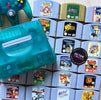
Starting a Video Game Collection on a Budget
, by Retromania, 5 min reading time
, by Retromania, 5 min reading time
Start a video game collection without breaking the bank: choose your console, compare editions, and avoid purchases that exceed your budget.
Do you need a large budget to collect video games? No, provided you choose a suitable goal. A compelling collection is measured not by the number of rare items, but by the coherence of the games you gather and the enjoyment they bring you.
To get started without racking up unnecessary expenses, choose a simple scope, set aside an available amount, and learn to compare copies. Here is a method for gradually building a retro game collection on a small budget.
Before looking for a new console, take stock of your equipment. A PS2, a Wii, or a handheld console forgotten in a drawer can become the starting point of your collection. Check that it works and see what accessories are included.
Also make a list of the games you already have, even those you are no longer interested in. This will help you avoid duplicates and distinguish what you want to keep, play, or potentially sell.
If you are starting from scratch, compare the total cost of several machines: console, cables, power supply, controller, memory card, and initial games. The cheapest hardware on its own is not always the most economical once you are ready to play.
"All Nintendo games" quickly becomes a difficult project to fund. "Five platform games for a console I own" provides a concrete goal. You can also choose a series, a genre, or a period from your childhood.
Avoid immediately aiming for a complete catalog. The latest titles in a series are sometimes the ones you want the least and require the most research. A personal collection does not need to resemble an exhaustive inventory.
Set a monthly allowance or an amount for upcoming purchases. Keep a reserve for shipping costs, an extra controller, or a missing accessory. A game listed at a low price loses its appeal if acquiring it requires several unforeseen expenses.
A purely budgetary example: with a €60 allowance, you could set aside €40 for games, €10 for fees and accessories, and keep €10 for later. This is not an estimate of market prices, but a way to avoid spending the entire budget on the first item.
Do not buy a larger bundle solely to reach a free shipping threshold. Compare what you save with the additional items you pay for.
| Option | Potential benefit | Compromise |
|---|---|---|
| Cartridge only | Access the game without paying for its collectible packaging. | No original box or manual. |
| Affordable re-release | Find another edition of the desired title. | Different presentation from the first edition. |
| Described cosmetic defects | Prioritize playing over display. | Visible wear that you are willing to accept. |
| Different regional version | Broaden the range of comparable copies. | Language and compatibility need to be checked. |
No option is systematically cheaper. Compare the final price and stick to a consistent approach: buying the same game three times to gradually improve its condition can cost more than waiting for the copy you want.
Rankings often highlight the same titles. They are useful for discovering a console, but they should not become your only shopping list. A racing game, a puzzle game, or a less-cited action title may perfectly suit your tastes.
For example, browse PS2 games or Wii games while comparing the copies currently available. Watch a gameplay sequence and learn about the controls before buying an unknown title.
The goal is not to fill a shelf with games you do not want, but to discover alternatives to titles that are beyond your budget.
A bundle seems advantageous when you divide its price by the number of games. This calculation becomes less relevant if half are duplicates, incompatible, or damaged.
Above all, assign a value to the games you want to keep. For the others, do not count on an immediate resale at the highest observed price. Think about the time needed to test, photograph, and ship them.
The terms "untested" and "needs restoration" indicate genuine uncertainty. They do not mean that a simple cleaning will suffice. To start, a small usable set may be more appealing than a large bundle with problems.
A simple table is enough: title, console, edition, condition, total price paid, and missing items. Add a short wishlist ranked by priority.
Before placing an order, ask yourself three questions: Is this a game I already wanted? Is its condition suitable for me in the long term? Does the purchase remain within my total budget? If the answer is no, you can wait without "missing out" on your collection.
If you decide to sell duplicates, our buyback service can consider your offer. An offer depends on the contents of the bundle and does not automatically correspond to the price at which you bought it.
No. Define your own goal. Cartridges only are suitable for a collection focused on playing; boxes and manuals become more important for display and certain editions.
No. Demand and prices fluctuate. Build your collection according to your tastes, without taking a future increase for granted.
Only if you are interested in them. A small number of chosen games often allows you to make better use of your budget and limit purchases you later regret.
Explore the available games and build your selection


